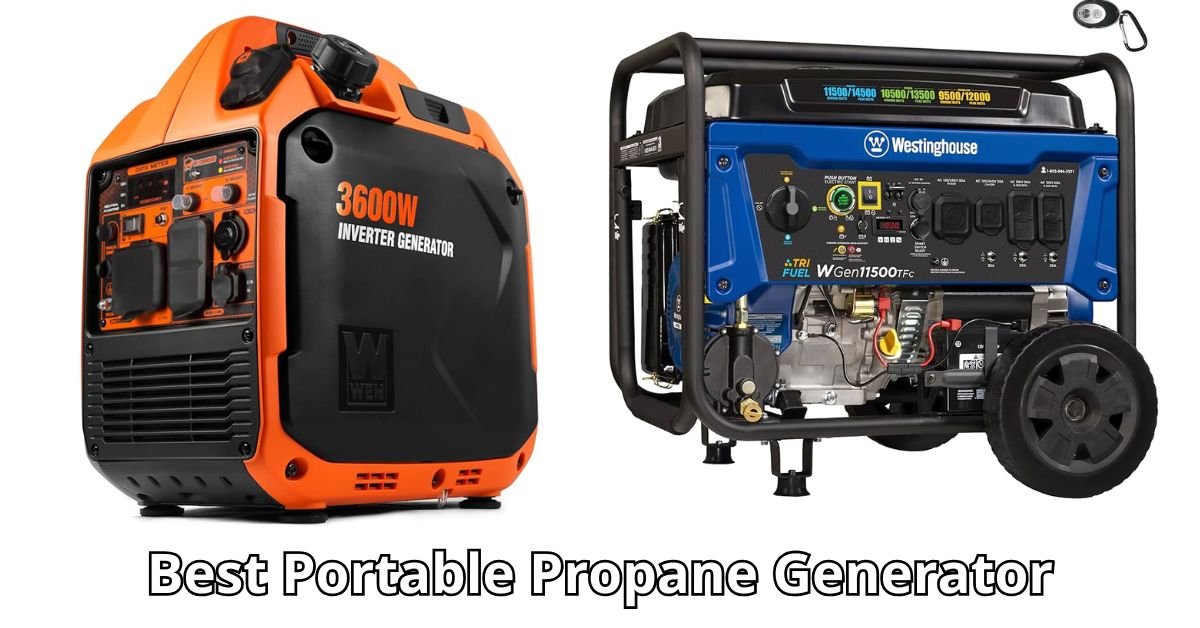
A sudden blackout plunges your home into darkness. The fridge groans, the kids are restless, and that important meeting you had scheduled tomorrow? Suddenly in jeopardy. In moments like these, a reliable generator isn't just a convenience; it's peace of mind. But with so many options, how do you choose the right one? This guide will demystify the process, showing you [How to Choose the Right Propane Generator: Sizing, Features & Brands] that truly fits your needs, making sure you’re ready when the lights go out.
Propane generators offer a clean-burning, reliable power source, making them a fantastic choice for emergency backup, job sites, or even recreational use. They burn cleaner than gasoline, have a longer shelf life, and are generally safer to store. But picking the perfect model requires a clear understanding of your power demands, the features that matter most, and which brands consistently deliver.
At a Glance: Your Propane Generator Checklist
- Size it right: Calculate your starting and running wattage needs. Undersizing means no power, oversizing means wasted fuel.
- Know your type: Decide between a portable unit for flexibility or a whole-house standby generator for seamless, automatic backup.
- Feature hunt: Look for electric start, low-oil shutdown, inverter technology for sensitive electronics, and appropriate outlets.
- Brand matters: Research reputable brands known for reliability and customer support.
- Budget smartly: Factor in not just the generator cost, but also installation (for standby), fuel, and maintenance.
- Safety first: Always operate generators outdoors, away from windows, and with proper ventilation.
Why Propane? Unpacking the Fuel Choice
Before diving into models, let's quickly reaffirm why propane often makes an excellent choice for a generator fuel source. Propane boasts an impressive shelf life, remaining viable for decades without degrading, unlike gasoline which can go bad in a matter of months. This makes it ideal for emergency backup where the fuel might sit unused for long periods. It also burns cleaner, producing fewer emissions and less carbon buildup in the engine, which can extend the generator's lifespan and reduce maintenance needs. Plus, propane is generally safer to store than gasoline, presenting a lower fire risk and less unpleasant odor. If you're weighing your options, you might find our deeper dive into propane generator vs. gasoline generator particularly helpful.
Generator Types: Portable Power vs. Standby Assurance
Your first major decision point boils down to how you plan to use your generator. Do you need a mobile power source you can take camping or to a job site, or are you looking for a fixed solution that automatically kicks in when your home loses power?
Portable Propane Generators: Flexibility on Wheels
Portable generators are the workhorses of temporary power. They’re designed to be moved, offering versatility for various scenarios. You connect them to external propane tanks (like the ones used for your BBQ grill, or larger 100lb tanks), and they provide power through onboard outlets.
- Pros: Lower upfront cost, mobile, easy to operate, good for essential circuits or specific appliances.
- Cons: Require manual setup and fueling, often louder, not designed to power an entire home (though larger models can handle significant loads).
- Best for: Camping, tailgating, DIY projects, powering essential appliances during short outages, or as a backup for a small cabin. You can find detailed reviews of portable propane generators to guide your selection.
Standby (Whole-House) Propane Generators: Automated Peace of Mind
These are essentially permanent installations, similar to an outdoor air conditioning unit. They connect directly to your home's electrical system via an automatic transfer switch and tie into your main propane supply (often a large, dedicated tank). When utility power fails, the transfer switch senses it and automatically starts the generator, seamlessly restoring power to your pre-selected circuits or even your entire home.
- Pros: Fully automatic operation, can power an entire home, quiet operation (often encased), direct fuel line (no refueling during an outage), adds value to your home.
- Cons: Significant upfront cost (unit + installation), requires professional installation and permits, fixed location.
- Best for: Homeowners who want comprehensive, hands-off power protection, especially in areas prone to frequent or prolonged outages. For a deep dive into setting up such a system, check out our guide on whole-house propane generator installation process. And for a broader perspective, consider exploring Your guide to home propane generators.
The Art of Sizing: Getting Your Power Needs Right
This is arguably the most critical step. An undersized generator won't power everything you need, leading to frustration and potential appliance damage. An oversized generator means you've spent too much money and will waste fuel.
Understanding Watts: Starting vs. Running Power
Every electrical appliance has two wattage ratings you need to consider:
- Running Watts (or Rated Watts): This is the continuous power an appliance needs to operate normally.
- Starting Watts (or Surge Watts): This is the extra burst of power an appliance (especially those with motors like refrigerators, air conditioners, or power tools) requires for a few seconds when it first kicks on. Starting wattage can be 2-3 times higher than running wattage.
Your generator's running wattage capacity must meet the sum of the running watts of all appliances you want to run simultaneously. Crucially, its starting wattage capacity must be able to handle the highest single starting wattage spike from any appliance you turn on while others are already running.
Your Appliance Power Checklist
Grab a pen and paper (or open a spreadsheet). You need to list every item you'd want to power during an outage. Don't guess; check the appliance labels, owner's manuals, or use a wattage meter.
Typical Appliance Wattages (Estimates – Always Verify!):
| Appliance | Running Watts (Approx.) | Starting Watts (Approx.) |
|---|---|---|
| Refrigerator (15-20 cu ft) | 600 | 1800 |
| Sump Pump (1/3 HP) | 800 | 1600 |
| Well Pump (1/2 HP) | 1000 | 2000 |
| Freezer | 500 | 1500 |
| Portable Heater | 1500 | 0 |
| Window AC (10,000 BTU) | 1200 | 3600 |
| Microwave (1000W) | 1000 | 0 |
| Television (LED) | 100 | 0 |
| Desktop Computer | 200 | 0 |
| Laptop Computer | 50 | 0 |
| Charging Phones | 5-10 | 0 |
| Lights (LED/CFL) | 10-20 per bulb | 0 |
| Coffee Maker | 800 | 0 |
| Electric Water Heater | 4500 | 0 |
| Central AC (3-ton) | 3500-5000 | 10,000-15,000 |
Sizing Calculation: Step-by-Step
- List Essentials: Prioritize. What must run (fridge, furnace fan, well pump, lights)? What would be nice to have (TV, computer)?
- Sum Running Watts: Add up the running watts for all the appliances you plan to operate simultaneously. This gives you your total running wattage requirement.
- Identify Highest Starting Wattage: Look at your list and find the single appliance with the highest starting wattage. This is your peak starting wattage requirement.
- Add Running to Peak Starting: Take your total running wattage (from step 2), then add the difference between the highest starting wattage (from step 3) and its own running wattage.
- Example: If your total running watts is 3000W, and your fridge (600 running / 1800 starting) has the highest starting surge, you need to account for the additional 1200W (1800-600) surge it demands.
- Calculation:
Total Running Watts + (Highest Starting Wattage - That Appliance's Running Wattage) = Minimum Generator Starting Wattage. - So, 3000W + (1800W - 600W) = 3000W + 1200W = 4200W minimum starting wattage needed.
- Add a Buffer: Always add a 10-20% buffer to both your running and starting wattage calculations. This accounts for potential power fluctuations, future needs, or slight inaccuracies in your estimates.
Quick Rule of Thumb (for portable generators):
- 3,000 – 5,000 watts: Powers basic essentials like a refrigerator, some lights, phone charging, and a TV.
- 5,000 – 7,500 watts: Handles more, including a well pump, microwave, or a small window AC unit.
- 7,500 – 10,000+ watts: Can run most household essentials, potentially including a central AC on a managed load.
For standby whole-home generators, the process is similar but often involves a more precise load calculation by an electrician who can help you prioritize circuits and ensure your unit meets local electrical codes.
Essential Features to Look For in a Propane Generator
Once you have your size determined, it's time to consider the features that enhance performance, safety, and convenience.
Engine & Power Delivery
- Engine Size & Type: A larger engine generally means more power and durability. Look for features like cast-iron cylinder sleeves for longevity.
- Inverter Technology: For sensitive electronics (computers, smart TVs, medical devices), an inverter generator is paramount. It produces "clean" power (low Total Harmonic Distortion or THD, typically <3%) that's safe for delicate circuits, unlike traditional open-frame generators which can produce "dirty" power.
- Circuit Breakers: Essential for protecting the generator and your appliances from overloads.
- Outlets: Ensure the generator has the right types and number of outlets for your needs (e.g., 120V GFCI household outlets, 120/240V twist-lock outlets for larger appliances or transfer switches).
Safety Features
- Low-Oil Shutdown: Automatically turns off the generator if oil levels drop too low, preventing costly engine damage. This is a non-negotiable feature.
- Overload Protection: Prevents the generator from being damaged if you try to draw too much power.
- CO Sensor/Shutdown: Carbon Monoxide (CO) is a silent killer. Some advanced generators now include built-in CO sensors that will shut down the unit if dangerous levels are detected. While a great feature, always remember to operate generators outdoors, far from windows and doors. Our propane generator safety guidelines are a must-read.
Convenience Features
- Electric Start: A simple push-button or key-turn start is a godsend, especially in an emergency. Pull-start can be difficult for some, particularly with larger engines.
- Remote Start/Wireless Remote: Some models allow you to start/stop the generator from a distance, which is incredibly convenient if it's raining or cold outside.
- Fuel Gauge: For portable units, a visual fuel gauge helps you monitor propane levels and anticipate when a tank change is needed.
- Hour Meter: Tracks run time, crucial for scheduling maintenance. Speaking of which, regular care is vital; check out our propane generator maintenance tips.
- Portability Kit: For portable generators, large, flat-free wheels and a sturdy handle make moving the unit much easier.
- Automatic Transfer Switch (for standby): The core of a whole-house system, making it fully automatic.
Dual-Fuel Capability
Many modern propane generators are actually "dual-fuel," meaning they can run on either propane or gasoline (or sometimes natural gas). This offers tremendous flexibility, allowing you to use whatever fuel is most readily available. Propane is often preferred for longer-term storage and cleaner burn, while gasoline might offer a slight power boost or be easier to acquire in some scenarios. Explore the advantages in our guide to the best dual-fuel generators.
Navigating the Brands: Reliability, Value, and Innovation
Once you know your sizing and desired features, you’ll start seeing familiar names. Here are some of the most reputable brands in the generator market, along with what they’re generally known for:
- Generac: A dominant force in the standby generator market, Generac is almost synonymous with whole-house power. They also offer a strong line of portable propane and dual-fuel units. Known for robust engineering and extensive dealer networks.
- Champion Power Equipment: This brand offers excellent value, particularly in the portable and dual-fuel segments. Champion generators are often praised for their competitive pricing, reliable performance, and innovative features like remote start. They've built a reputation for solid, accessible power solutions.
- Honda: Synonymous with quiet, reliable, and fuel-efficient inverter generators. While often at a premium price point, Honda units are beloved for their smooth operation, clean power, and legendary longevity, especially in smaller, portable formats.
- Westinghouse: A well-regarded brand offering a wide range of portable and dual-fuel generators. Westinghouse models often come packed with features at competitive prices, making them a popular choice for homeowners and recreational users seeking a balance of quality and affordability.
- DuroMax/DuroStar: Known for powerful, heavy-duty portable generators, often with dual-fuel capability. These brands focus on delivering high wattage at a good price, making them a go-to for job sites or larger home backup needs where noise isn't the absolute top priority.
- Wen: Offers a good range of affordable portable and inverter generators, often considered a solid entry-level choice. Wen provides decent features for the price, making them popular for casual use or those on a tighter budget.
What to Consider Beyond the Name: - Warranty: A strong warranty signals a manufacturer's confidence in their product.
- Customer Support: When you have a question or an issue, can you get help easily? Look for brands with good reviews for customer service.
- Parts Availability: Can you easily find replacement parts if needed?
- Service Network: For standby generators especially, a strong local service network for installation and maintenance is crucial.
Common Questions About Propane Generators
Let's address some typical concerns that arise when considering a propane generator.
How long will a propane tank last?
This depends entirely on the generator's load and the size of your propane tank. A small 20lb BBQ tank might only power a 3,500-watt generator for 5-8 hours at half load. A large 500-gallon home propane tank, however, could power a 20kW standby generator for several days, possibly even a week or more, depending on usage. Always factor in your expected run time and have enough fuel on hand.
Are propane generators safe to use indoors?
Absolutely not. Like all internal combustion engines, propane generators produce carbon monoxide (CO), a colorless, odorless, and deadly gas. Generators must always be operated outdoors in a well-ventilated area, at least 20 feet away from windows, doors, and vents to prevent CO from entering your home. Even with a CO sensor on the generator, never take this risk.
How loud are propane generators?
Noise levels vary significantly by type and model.
- Traditional Portable Generators: Can be quite loud, often in the 70-80+ decibel range (like a vacuum cleaner or lawnmower).
- Inverter Generators: Generally much quieter, often in the 50-60 decibel range, comparable to normal conversation.
- Standby Generators: Usually enclosed, making them quieter than most portables, often in the 60-70 decibel range. Proximity to your home and neighbors should be a factor in your choice.
Is a dual-fuel generator better than a propane-only generator?
"Better" is subjective. A dual-fuel generator offers versatility, allowing you to use whichever fuel is available or preferred at a given moment. This can be a huge advantage for extended outages or if one fuel source becomes scarce. Propane-only generators are simpler by design and typically run very cleanly, but lack the backup fuel option. For many, the flexibility of dual-fuel is worth the slight added complexity or cost.
Do I need to break in a new propane generator?
Yes, most manufacturers recommend a break-in period, typically running the generator for a few hours under a light load before its first oil change. This helps seat the piston rings and ensures long-term engine health. Always follow the manufacturer's instructions for your specific model. For tips on getting started, refer to our guide on how to start a propane generator.
Your Next Steps: Making the Final Decision
Choosing the right propane generator is a significant investment in your peace of mind. By systematically evaluating your power needs, desired features, and reputable brands, you're well on your way to making an informed decision.
- Re-evaluate Your Needs: Double-check your wattage calculations. Consider future needs – are you adding a new appliance soon?
- Compare Features: Create a checklist of must-have and nice-to-have features based on your priorities (e.g., electric start, inverter technology, remote start, CO sensor).
- Research Brands & Models: Read reviews, compare specifications, and check warranty information for models that fit your criteria.
- Factor in Fuel & Logistics: How will you store propane? How much will you need? For standby units, consider the location of your large tank.
- Budget Appropriately: Don't just look at the generator's price. Include costs for fuel, a transfer switch (if applicable), professional installation (for standby), and ongoing maintenance.
- Consult a Pro (for Standby): If you're considering a whole-house standby unit, absolutely get multiple quotes from licensed electricians and generator installers. They'll ensure proper sizing, safe installation, and compliance with all local codes.
The right propane generator will be a reliable guardian against power outages, quietly standing by to restore comfort and functionality to your life. Take your time, do your homework, and you'll choose a generator that serves you well for years to come.