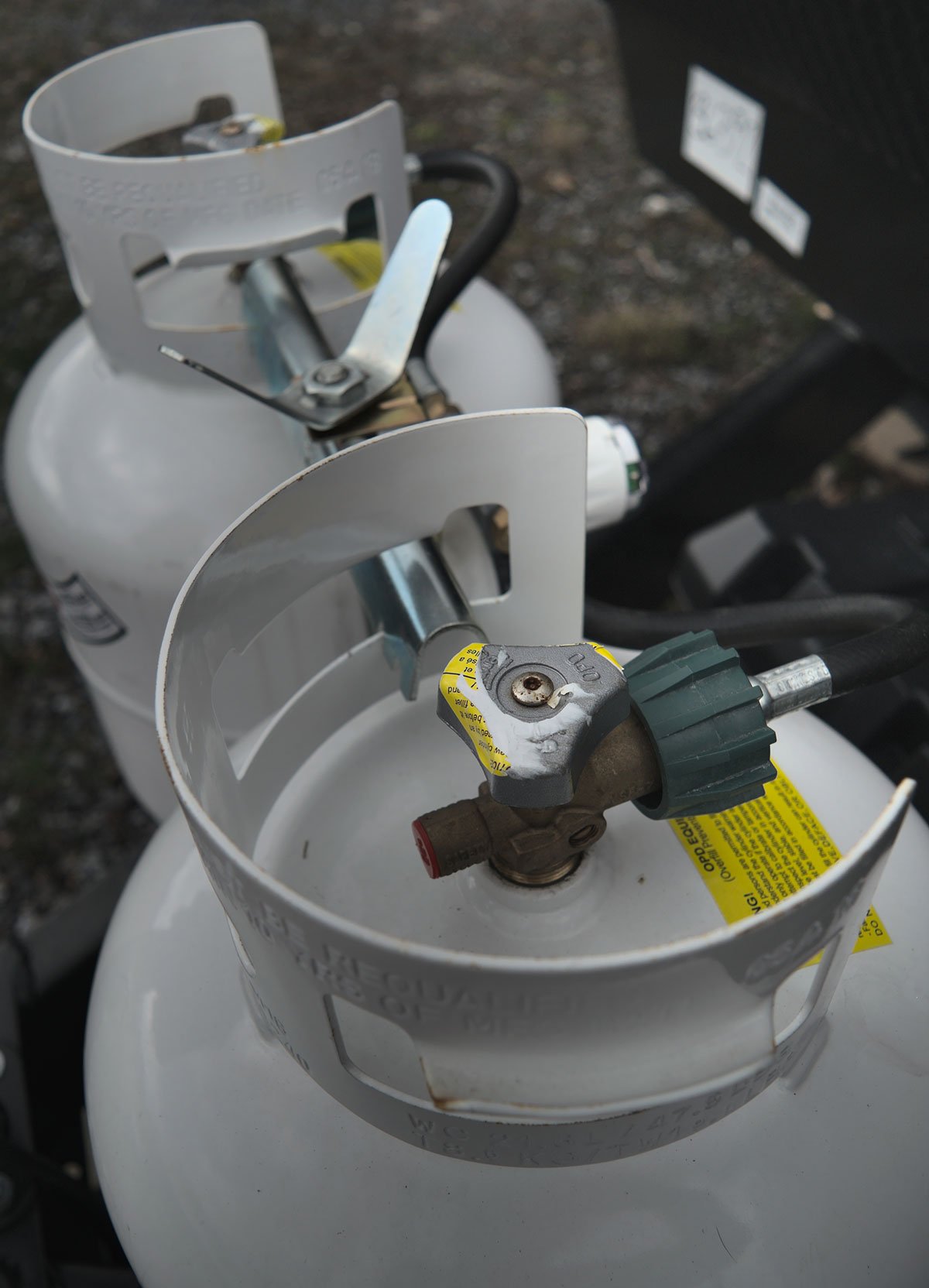
When the power goes out, your propane generator steps up, ready to light up your home, keep your food cold, and ensure life's essentials continue humming. But a generator isn't just a standalone powerhouse; it's the heart of a system. To truly unlock its potential, enhance its safety, and extend its lifespan, you need the right Propane Generator Accessories & Essential Add-ons. These aren't just fancy extras; they're critical components that transform your generator from a simple machine into a reliable, efficient, and user-friendly emergency solution.
This isn't about buying every gadget on the market. It's about making smart, informed choices to ensure your generator is always ready, safe to operate, and perfectly suited for your needs.
At a Glance: Key Takeaways for Propane Generator Accessories
- Manufacturer First: Always prioritize official, manufacturer-supplied accessories for guaranteed compatibility, safety, and warranty protection. Third-party options carry risks.
- Safety is Non-Negotiable: Accessories like heavy-duty extension cords and transfer switches are vital for safe operation, preventing hazards like carbon monoxide poisoning or electrical backfeeding.
- Mobility Matters: Wheel kits are a must-have for generators over 110 lbs, making relocation a breeze.
- Monitor & Maintain: Hour meters and clamp meters help track usage for maintenance and ensure proper load management.
- Extend Runtime: Gravity-fed extended-run fuel tanks increase operational hours safely (avoid pump systems that modify fuel lines).
- Protect Your Investment: Storage and storm covers shield your generator from the elements, ensuring longevity.
- Avoid Risky Add-ons: Steer clear of unapproved fuel conversion kits, exhaust silencers, and especially dangerous exhaust extensions.
Beyond the Basics: Why Accessories Are Your Generator's Best Friend
Think of your propane generator as a powerful engine, and its accessories as the toolkit that allows you to use that power effectively, safely, and conveniently. Without them, you might find yourself struggling to move it, unable to connect to your home, or constantly worried about its maintenance. From ensuring easy portability to seamlessly integrating with your household electrical system, these add-ons are often the difference between frustration and a smooth, confident power backup experience.
The Golden Rule: Official Accessories First
Before you even think about a shiny new gadget, always check if your generator's manufacturer offers a compatible version. This isn't just a suggestion; it's a critical safety and reliability directive. Manufacturer-supplied accessories come with guaranteed compatibility, have undergone rigorous safety testing, and won't risk voiding your generator's warranty.
Third-party accessories, while sometimes cheaper, can introduce significant risks. They might not fit correctly, could fail prematurely, or worse, create a dangerous situation. Always check your owner's manual or consult an authorized dealer to confirm compatibility before purchasing any accessory.
Getting Your Generator Moving: Mobility Solutions
A propane generator, especially a powerful one, can be a hefty piece of equipment. If you need to move it regularly – whether for storage, positioning during an outage, or taking it on an RV trip – mobility accessories are non-negotiable.
Wheel Kits: Smooth Rolling, No Heavy Lifting
Imagine wrestling a 200-pound generator across your yard. Not fun, right?
What they are: Consisting of two to four sturdy wheels and often a folding handle, wheel kits transform a stationary behemoth into a portable workhorse.
Why you need one: If your generator weighs over 110 lbs and you anticipate needing to move it more than a few feet, a wheel kit is essential. It prevents strain on your back and makes deployment significantly easier.
What to look for: Ensure the kit is designed for your specific generator model. Look for robust wheels that can handle uneven terrain if you plan to move it beyond a paved surface.
Cost: Typically $30-$150.
Lifting Kits and Hanger Kits: Vertical Power for Specific Needs
While less common for the average homeowner, these kits are crucial for specific applications.
What they are: These kits typically include a steel crossbar that attaches to your generator, providing a secure point for crane hooks or other lifting equipment.
Why you might need one: If you operate your generator in a construction environment or require vertical transport (e.g., lifting onto a truck bed with specialized equipment), a lifting or hanger kit ensures safe and stable elevation.
Cost: Around $20-$50.
Powering Up Safely: Adapters, Cords & Bonding Essentials
Connecting your generator to your devices or home safely is paramount. This category covers the critical links in your power chain.
Adapters: Bridging the Power Gap
Not all plugs are created equal, and your generator's outlets might not always match your appliance's needs.
What they are: Adapters convert one type of electrical plug or outlet into another. They come in linear or "dog bone" shapes.
Why you need one: These are particularly useful for RV owners or anyone connecting appliances with different plug configurations to their generator. For example, an L5-30P to TT-30R adapter lets a 30-amp twist-lock outlet power an RV's 30-amp standard recreational vehicle inlet.
How to choose: First, identify the specific outlets on your generator. Then, determine the exact plug type of the device or RV you want to power. Match these precisely with an appropriate adapter.
Cost: Around $20.
Heavy-Duty Extension Cords: Safety First, Distance Always
This isn't just any extension cord; it's a critical safety device.
What they are: Robust electrical cords designed to carry significant current over distances without overheating. They range from 2 to 100 feet.
Why you need one: Generators must always operate outdoors to prevent carbon monoxide poisoning. A heavy-duty extension cord allows you to place your generator at least 20 feet away from your home's windows and doors while still reaching your devices. Using undersized cords can lead to overheating, fire, and power loss.
What to look for: Prioritize heavy-duty cords, typically 10- or 12-gauge, to handle the demands of most household appliances. The shorter the cord, the less voltage drop.
Essential Safety Tip: Never run extension cords under doors or through windows, as this can damage the cord and create a fire hazard. Ensure the cord is long enough for the 20-foot outdoor rule.
Cost: $50-$200 for a quality heavy-duty cord.
Bonding Plugs: The Electrical Peacekeeper for Advanced Users
This accessory addresses a specific electrical nuance.
What they are: Also known as Edison plugs, these devices create a neutral-to-ground bond within your generator's electrical system.
Why you might need one: Many portable generators feature a "floating neutral," meaning the neutral wire is not connected to the generator's frame (ground). Some advanced electrical protection products or RV surge protectors might misinterpret this floating neutral as an "open ground," preventing them from working. A bonding plug resolves this by establishing the necessary connection.
Who needs it: Primarily advanced users, particularly those with RVs or specific electrical setups that require a bonded neutral to function correctly with safety equipment.
Cost: Under $20.
Smart Power Management: Parallel Kits & Meters
Managing your power output and understanding your generator's performance are key to efficient and safe operation.
Parallel Kits: Doubling Down on Power
Sometimes one generator isn't enough, but two smaller ones are more flexible than one giant one.
What they are: These kits allow two compatible inverter generators to run in parallel, combining their power output to run larger loads. They can be simple connecting cables or small boxes with multiple inlets and a single higher-output outlet.
Why you need one: If you own two compatible inverter generators and need more power (e.g., for an RV, specific camping needs, or more household appliances), a parallel kit offers a flexible solution. It often provides more power than a single larger generator while maintaining the fuel efficiency and quieter operation of inverter models.
Important Note: Power output is limited by the kit's capacity and the combined output of your generators. Always use first-party kits if available for guaranteed compatibility and safety.
Cost: $50-$100.
Meters: Your Generator's Dashboard
Unless your generator has a sophisticated data center, external meters are your eyes and ears into its operation.
Clamp Meters (Voltmeters, Current Testers): The Output Oracle
What they are: Handheld devices that can measure voltage, current (amps), and sometimes wattage, by clamping around an electrical wire without breaking the circuit.
Why you need one: A clamp meter is invaluable for understanding your generator's output at its sockets and determining the actual consumption of your appliances (both starting and running watts). This helps you avoid overloading the generator and ensures you're staying within its capacity. It's a must-have if your generator lacks a built-in data center, and recommended even if it has one for verifying readings.
Cost: Around $50.
Vibration-Activated Hour Meters: Maintenance Maverick
What they are: Small, easily attachable devices that track your generator's runtime by detecting vibrations when it's operating.
Why you need one: Adhering to maintenance schedules (like oil changes, filter replacements, and spark plug checks) is critical for your generator's longevity and reliability. Many maintenance tasks are based on operating hours. If your generator doesn't have a built-in hour meter, a vibration-activated one is a simple, cost-effective way to track its use and ensure you never miss a service interval.
Cost: Around $15.
Seamless Integration: Transfer Switches for Home Power
For anyone looking to power their home directly from a portable generator, a transfer switch is not just an accessory; it's a fundamental safety requirement.
What they are: A transfer switch is an electrical panel installed between your generator and your home's main electrical panel. It allows you to safely switch your home's power source between the utility grid and your generator.
Why it's essential:
- Prevents Backfeeding: This is the most critical safety function. Without a transfer switch, connecting a generator directly to your home's main panel can "backfeed" electricity onto the utility lines. This can fatally electrocute utility workers who are trying to restore power. It's illegal and incredibly dangerous.
- Protects Appliances: Ensures your home circuits receive clean, stable power without surges or drops.
- Convenience: Once installed, you simply flip a switch to transition from grid to generator power, avoiding the hassle of running multiple extension cords.
Types:
- Manual Transfer Switches (MTS): You manually start your generator and then flip a switch on the MTS to transfer power to selected circuits in your home. Most portable generators use an MTS.
- Automatic Transfer Switches (ATS): These detect a power outage, automatically start a compatible generator, and transfer power. While some portable generators (e.g., Genmax GM12500iET, Ford FG18KVTWTCO) support ATS, many do not support automatic startup, which can limit the "automatic" utility of an ATS for portables.
Recommendation: If you plan to power circuits within your home using a portable generator, a transfer switch is not optional—it's absolutely essential for safety and compliance.
Cost: Several hundred dollars for a basic 30-amp manual transfer switch, plus installation costs.
Fueling Longer Operations: Extended-Run Fuel Tanks
Running out of fuel in the middle of a storm is far from ideal. Extended-run fuel tanks offer a solution.
What they are: These add-on tanks increase your generator's fuel capacity, allowing it to run for significantly longer periods without needing a refill.
Gravity-Fed Systems: These are the simpler, safer option. They typically consist of an external fuel tank that sits higher than your generator, allowing fuel to gravity-feed into the generator's internal tank as needed. This acts as an automated refill system for the generator's built-in tank.
Pump Systems (Not Recommended): More advanced systems modify the generator's fuel lines to draw directly from a larger external tank using a pump. Manufacturers strongly discourage and typically do not recommend these systems. They often void warranties, compromise emission ratings, and can introduce fuel delivery issues or leaks.
Recommendation: Stick to basic gravity-fed kits if you need extended runtime. Ensure the external tank is stable, properly vented, and placed according to safety guidelines.
Cost: At least $100 for a basic gravity-fed kit.
Keeping Your Engine Healthy: Essential Maintenance Gear
A generator is an investment that requires routine care. These accessories help keep it in peak condition.
Fuel Stabilizers: The Shelf-Life Savior
Stale fuel is the enemy of small engines.
What they are: Chemical additives designed to prevent gasoline (or dual-fuel generator's gasoline component) from degrading over time. They stop gum and varnish deposits from forming and protect the carburetor.
Why you need one: If you don't drain your carburetor and gas tank after every use, especially if your generator sits idle for weeks or months between uses, fuel stabilizer is crucial. It prevents fuel system clogs and ensures your generator starts reliably when you need it most.
Recommendation: Always have a bottle on hand, particularly for seasonal or occasional users.
Cost: Inexpensive, typically under $10-$20.
Magnetic Oil Dipsticks: Tiny Guard, Big Impact
A simple, yet powerful upgrade for engine longevity.
What they are: An aftermarket oil dipstick with a powerful magnet at its tip.
Why you need one: Many small engines, including those in portable generators, lack traditional oil filters. As the engine runs, tiny metallic particles from wear and tear circulate in the oil. A magnetic dipstick attracts and captures these shavings, preventing them from causing further damage. It's an easy, inexpensive way to reduce engine wear.
Important: Ensure you purchase the correct thread size for your generator's engine.
Cost: $15-$20.
Maintenance Kits: All-in-One Convenience
Simplify your routine servicing.
What they are: Pre-packaged kits that typically contain essential components for routine maintenance: spark plugs, air filters, oil, oil filters (if applicable), funnels, and sometimes cleaning equipment.
Why you need one: Especially useful for first-time generator owners, these kits take the guesswork out of gathering necessary parts. They ensure you have the right components for your specific model when it's time for an oil change or tune-up.
Recommendation: Great for an initial purchase. For subsequent services, you might buy individual components based on wear, unless the full kit remains more cost-effective.
Protecting Your Investment: Covers for All Seasons
Whether in storage or in the thick of a storm, your generator needs protection from the elements.
Storage Covers: Dust & Dirt Defense
What they are: Lightweight covers designed to shield your generator from dust, dirt, and minor bumps when it's not in use.
Why you need one: Keeps your generator clean and ready for deployment, preventing debris from accumulating in vents or sensitive components during storage.
What to look for: Model-specific first-party covers are preferred for a snug fit.
Important: These are not designed for outdoor exposure or for use while the generator is running.
Cost: $10-$30.
Storm Covers (Running Covers): Power Through the Rain
What they are: Heavy-duty, water-resistant or waterproof covers designed specifically for operating your generator in adverse weather conditions like rain, snow, or sleet. They often feature a sturdy, vent-allowing backbone or frame for wind resistance and airflow. Examples include those from Champion Power Equipment and Westinghouse.
Why you need one: You can't always choose when an outage hits. If you need to run your generator in rain or snow, a storm cover is highly recommended to protect the electrical components and engine from moisture damage, ensuring safe operation in wet conditions.
Cost: $150-$200.
Conquering the Elements: Specialized Kits
For those operating generators in extreme conditions, specific kits can make all the difference.
Cold Weather Kits: Beating the Chill
What they are: These kits typically include a heating coil designed to prevent condensed water in the crankcase breather tube from freezing. Freezing can cause blockages, leading to oil leaks or engine damage.
Why you need one: If you frequently operate your generator in freezing temperatures, a cold weather kit is recommended to ensure reliable starting and prevent potential damage to the engine.
Recommendation: Professional installation may be needed for some kits.
Cost: $100-$300.
Altitude Kits: Breathing Easy at High Elevations
What they are: Sets of specially calibrated carburetor jets that adjust the fuel-to-air mixture for the thinner air density found at high elevations (typically above 2,000 feet).
Why you need one: At higher altitudes, engines can run "rich" (too much fuel for the available oxygen), leading to reduced performance, increased fuel consumption, and spark plug fouling. An altitude kit ensures optimal engine performance.
Caution: Modifying the carburetor may void your warranty. Using the wrong jet (e.g., an altitude jet at low elevation) can cause the engine to run "lean" (too little fuel), leading to overheating and severe engine damage. Use with care and only when necessary.
Cost: A few dollars.
Smart Controls: Remote Start Kits
Convenience at your fingertips.
What they are: Kits that allow you to remotely start your generator, typically via a key fob. This is for generators that have an electric start but lack a built-in remote feature.
Why you might want one: Imagine starting your generator from inside your home during a storm without having to venture outside. It's a significant convenience.
Important: Many remote start kits are third-party. Using them may void your warranty unless they are specifically sanctioned or offered by the manufacturer.
Recommendation: If remote starting is a priority, consider purchasing a generator with a built-in remote start feature from the factory as a potentially more cost-effective and warranty-friendly option.
Cost: $200-$500 (excluding installation).
Accessories to Approach with Caution (or Avoid Entirely)
Not all add-ons are created equal, and some pose serious risks to safety, performance, or your warranty.
The Red Flags: Warranty Breakers & Safety Hazards
- Fuel Conversion Kits (AVOID): These third-party kits claim to allow a generator to run on different fuel types (e.g., converting a gasoline generator to propane or natural gas). They are almost exclusively third-party, likely void your warranty, violate emission regulations, decrease performance, and can cause long-term engine damage. Stick to generators designed for specific fuel types or those explicitly advertised as dual-fuel or tri-fuel by the manufacturer.
- Silencers/Mufflers (AVOID): While generator noise can be an issue, aftermarket silencers or mufflers require exhaust modification. This restricts exhaust flow, negatively impacts engine performance, and will almost certainly void your warranty. If noise is a concern, invest in a quieter inverter generator or explore soundproof enclosures (designed for safety) instead.
- Exhaust Extensions (EXTREMELY DANGEROUS): These are designed to vent exhaust fumes away from the generator. The problem? They are almost universally used to attempt unsafe indoor operation. Generators must always run outdoors, far from windows and doors, due to the extreme danger of carbon monoxide poisoning. An exhaust extension does NOT make indoor operation safe and should never be used for this purpose.
A Word on Brand-Specific Accessories: The Generac Example
Many manufacturers, like Generac, offer an extensive ecosystem of accessories tailored to their specific models. For example, Generac provides:
- Maintenance kits (oil, filters, spark plugs)
- Cold weather kits (for optimal winter performance)
- Oil and battery warmers
- Transfer switches and power inlet boxes
- Extension cords and plugs
- Mobile Link connectivity devices (for remote monitoring)
- Propane monitoring solutions
- Load managers (for managing household power demand)
- Aesthetic options like paint kits and fascia base wraps
- Sound reduction kits (factory-approved)
- Seismic anchoring
- And other model-specific add-ons.
Always Confirm Compatibility: Before purchasing any accessory, especially for a specific brand like Generac, always verify compatibility with your generator's owner's manual, specification sheet, or an authorized dealer. This is where you can find your guide to propane generators that details specific models and their accessory ecosystems.
Making Smart Choices: Your Accessory Checklist
When evaluating potential propane generator accessories, ask yourself these questions:
- Is it truly essential for my needs? (Safety, mobility, basic maintenance are often "yes.")
- Is it a manufacturer-approved accessory? (Prioritize these above all else.)
- Will it void my warranty? (If third-party, research this carefully.)
- Does it enhance safety or convenience? (Avoid anything that compromises either.)
- Is it compatible with my specific generator model? (Double-check part numbers.)
- Does it offer a genuine benefit, or is it a "nice-to-have" that I can live without?
- What are the long-term implications for my generator's performance and lifespan?
Powering On with Confidence: Your Next Steps
Equipping your propane generator with the right accessories isn't just about spending money; it's about investing in peace of mind. A generator that's easy to move, safe to operate, properly maintained, and protected from the elements will serve you reliably for years to come.
Take a moment to assess your specific needs: Do you move your generator often? Do you plan to power your home directly? Do you live in an extreme climate? By answering these questions and referring to this guide, you can confidently select the Propane Generator Accessories & Essential Add-ons that will make your power backup solution truly complete and ready for anything.